
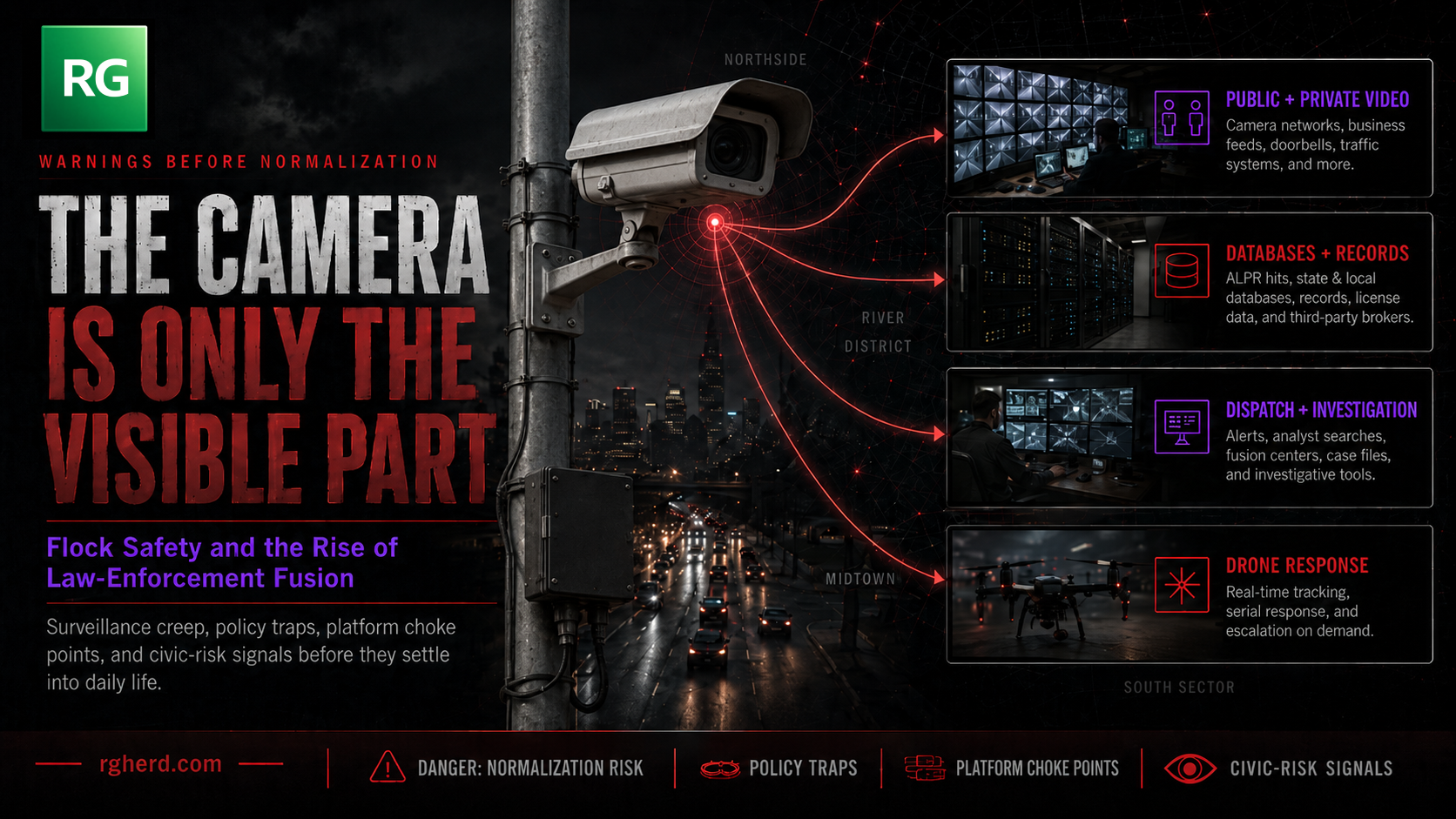
⚠️ The warning: identifying the camera is no longer enough.
A familiar Flock camera sits beside a road: a small box, a solar panel, a pole, and a cellular connection. It is visible, photographable, and easy to treat as the whole problem. It is not.
Flock’s public product line now spans vehicle recognition, fixed and movable video, acoustic detection, 911 integration, investigative search, real-time command software, outside sensors, private cameras, drones, and AI-assisted analysis. The company’s own architecture describes a connected detection-to-investigation-to-response system rather than a collection of isolated devices.[1]
The strongest defensible conclusion is straightforward: Flock is building a surveillance operating system. The roadside plate reader is one of its most visible inputs. The strategic product is the software and permission structure that can combine many observations, make them searchable, share them across organizations, and turn them into an alert, investigation, dispatch decision, or drone response.
The logo on the device does not define the system. The connections do.
The cameras collect information. The platform connects and operationalizes it. That is why counting Flock-branded poles no longer measures the real surveillance surface.
What “law-enforcement fusion” means
Historically, many public-safety technologies lived in separate boxes. A plate reader produced plate detections. A security camera recorded video. Dispatch received calls. A records system stored reports. A gunshot sensor created an alert. A business controlled its own cameras. A drone had separate operators and software.
Fusion platforms connect those boxes. A single event can be enriched with location, nearby cameras, vehicle history, police records, public records, partner-agency data, private video, or a live drone feed. The system does not need one perfect identifier. Several weaker observations can be associated until they point toward the same person, vehicle, address, object, or event.
This article uses three related meanings:
- Data fusion: combining separate records about the same person, vehicle, location, object, or event.
- Infrastructure fusion: connecting cameras, sensors, databases, trackers, drones, and software made by different companies.
- Operational fusion: turning combined information into searches, alerts, dispatch decisions, evidence, or physical response.
The system has three layers
Visible infrastructure
- Falcon, Falcon SR, Falcon LR, and Falcon Flex LPR cameras
- Solar poles and temporary mounts
- Condor Fixed, Condor PTZ, solar PTZ, and multi-directional video
- Flock Mobile Security Trailers
- Flock Audio Detection, formerly Raven
- Flock DFR aircraft, docks, and Flock Alpha
Connected infrastructure
- Traffic and municipal cameras
- Schools, campuses, hospitals, and businesses
- Apartment and HOA systems
- CAD, RMS, 911, alarms, and police vehicles
- Trackers and other vendors’ sensors
Invisible infrastructure
- Cloud databases and retention rules
- Search and sharing permissions
- Hotlists and alert rules
- APIs and integrations
- AI associations and exports
- Response triggers and audit logs
People can photograph a pole. They usually cannot see who can search its data, which private cameras are connected, which agencies share access, which hotlists generate alerts, which outside vendor performs analysis, what has been exported, or which event can trigger a drone or police response.
What Flock has become
Flock’s public portfolio is no longer adequately described as “license-plate readers.” The company sells or documents multiple hardware, software, service, and integration layers. The products below are separated individually because the public needs to understand what each part collects, where it connects, and what it can trigger.
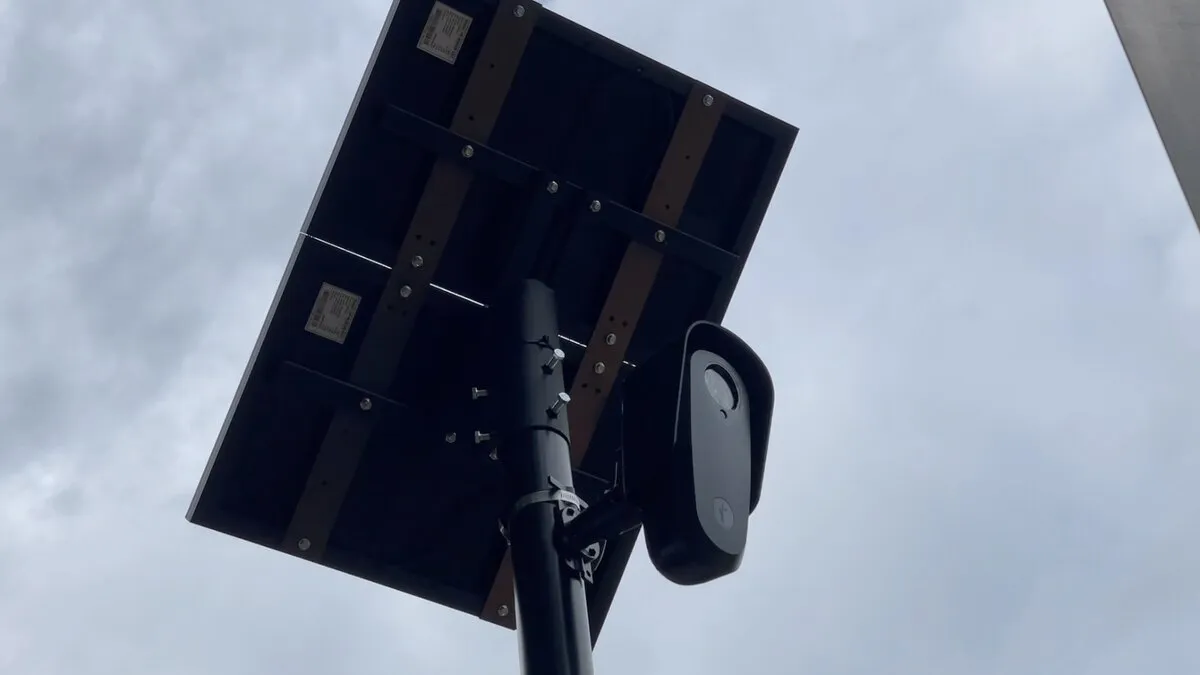
Falcon, Falcon SR, Falcon LR, and Falcon Flex
Flock’s named license-plate-reader family includes the standard Falcon, the short-range Falcon SR, the high-speed and multi-lane Falcon LR, and the relocatable Falcon Flex. Older neighborhood-facing materials may also refer to Sparrow. These products form the vehicle-recognition layer rather than functioning as plate-only cameras.[2][44]
- Known functions
- Plate and jurisdiction recognition; Vehicle Fingerprint searches using visible make, model, color, body type, damage, accessories, direction, time, and location; hotlist and custom alerts.
- Model roles
- SR covers tighter spaces such as lots and entrances; LR is marketed for faster, wider roadways; Flex is intended for tactical or temporary relocation; standard Falcon covers ordinary roads.
- Connects to
- Flock Safety Platform, FlockOS, shared LPR networks, FreeForm, Nova, hotlists, alerts, mobile workflows, and developer APIs.
- Why it matters
- A search can begin with a vehicle description rather than a known plate, and a dense network can reconstruct movement across many locations.
Retention and processing
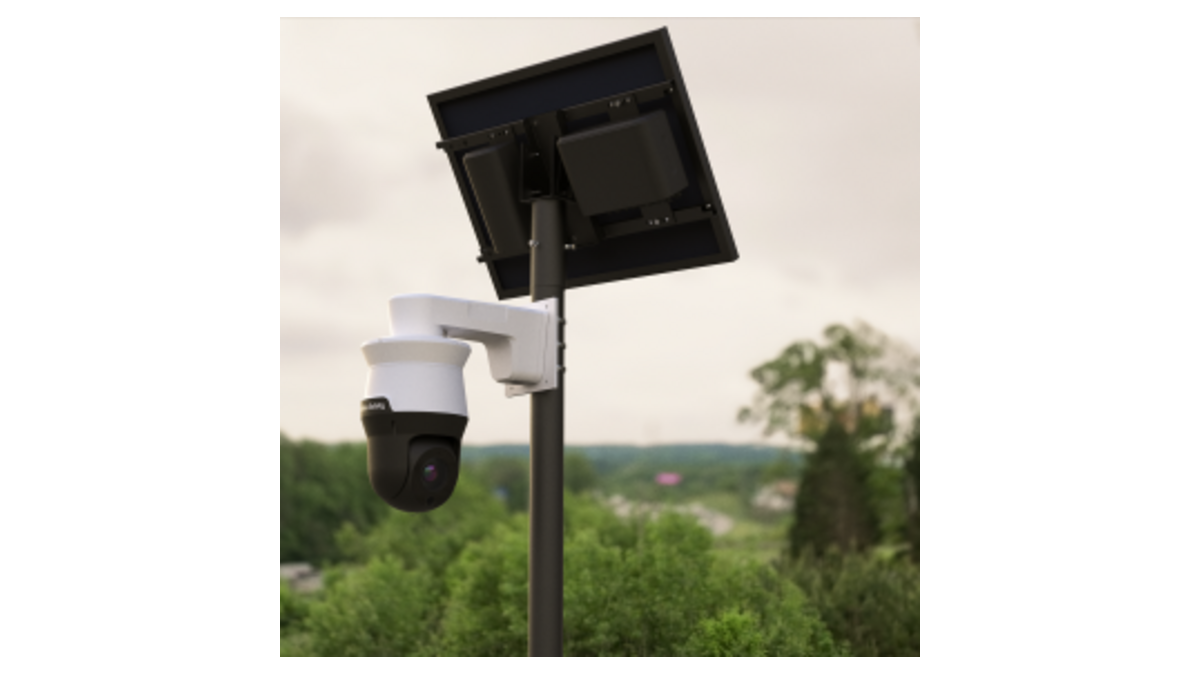
Condor Fixed, Condor PTZ, solar PTZ, and multi-directional bundles
Flock’s live-and-recorded video line has been marketed under the Condor name, although current pages also use the broader label “Flock Video Cameras.” Public materials document fixed cameras, pan-tilt-zoom units, solar-powered PTZ deployment, and multi-directional bundles. FreeForm and video analytics add descriptive search and alerting across authorized footage.[4][5][45]
- Known functions
- Live and recorded video, remote PTZ control, vehicle and people detection, visual alerts, after-hours or Guardian Mode alerts, and natural-language search through FreeForm.
- Deployment forms
- Fixed, PTZ, solar-powered PTZ, and multi-camera or multi-directional coverage packages.
- Connects to
- FlockOS, FreeForm, public and private camera sources, Wing Gateway, case workflows, mobile users, dispatch, and drone-response operations.
- Why it matters
- Flock says it does not use facial recognition, but the system can still locate and follow people through clothing, objects, movement, time, place, and associated vehicles.
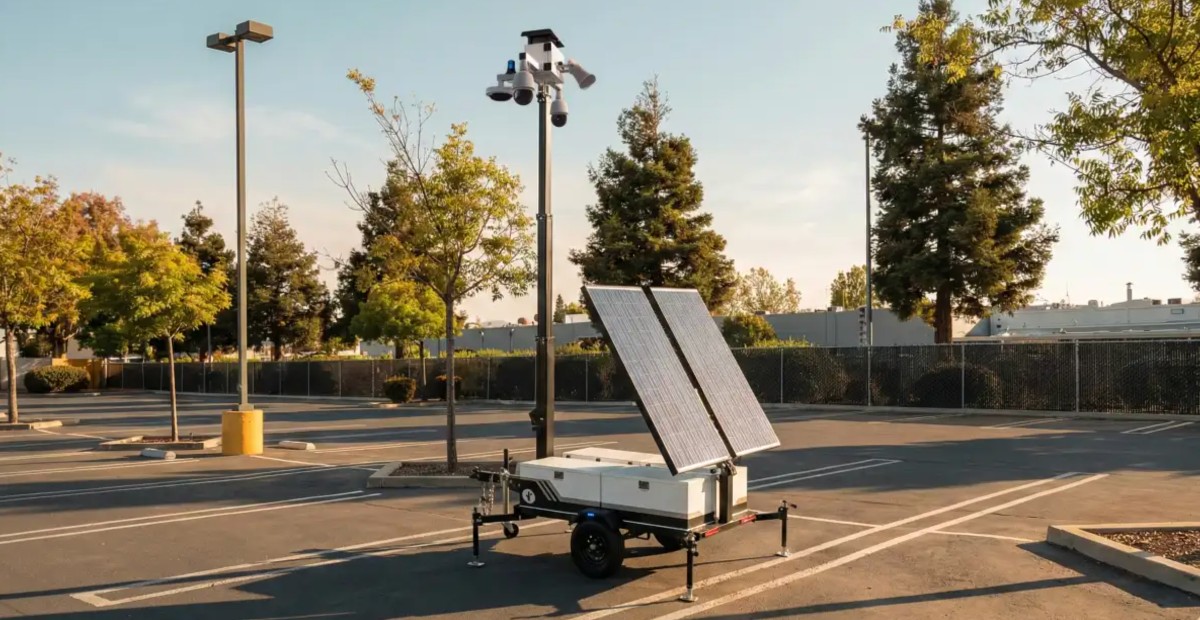
Mobile Security Trailer and Guardian Mode
The Flock Mobile Security Trailer is a named rapid-deployment package, not merely a generic trailer category. Flock describes solar and cellular operation, two high-resolution PTZ cameras, a panoramic camera, blue warning lights, talk-down speakers, AI alerting, and optional third-party Alert Response Service. Guardian Mode is the automated monitoring configuration used to detect and track people or vehicles during defined periods.[46]
- Known functions
- Panoramic and PTZ video, automated people or vehicle tracking, scheduled monitoring, remote or prerecorded talk-down, deterrent lighting, real-time alerts, and evidence capture.
- Optional services
- Alert Response Service can route alerts to trained monitoring personnel when a customer does not maintain its own operator desk.
- Connects to
- Flock video search, FlockOS, Guardian Mode, LPR cameras, remote monitoring, security teams, and law-enforcement evidence sharing.
- Why it matters
- It can establish a movable surveillance-and-intervention zone without permanent construction, so inventories and maps can become stale quickly.
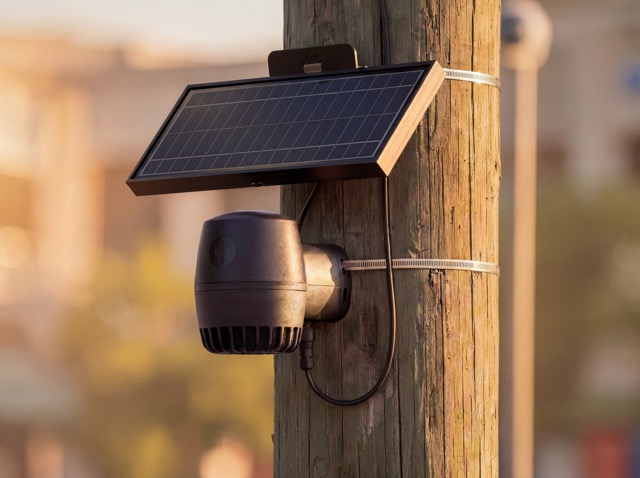
Audio Detection, formerly Raven
Flock Audio Detection, formerly Flock Safety Raven, classifies acoustic events such as gunshots, fireworks, sideshows, and severe crashes. Flock says the devices continuously analyze short rolling windows locally, discard nonqualifying audio, and transmit short event clips when a qualifying signature is detected.[6]
- Known functions
- Acoustic-event classification, localization, event logging, policy-based alerts, system-health and tamper alerts, and linkage to nearby LPR and video evidence.
- Connects to
- FlockOS, nearby Falcon and Condor observations, dispatch, investigations, public dashboards, and RTCC workflows.
- Boundary
- Flock says the system cannot open a live listening feed or identify voices or speech. A limited human-distress pilot was ended in July 2026 and should not be described as a current product.[7]
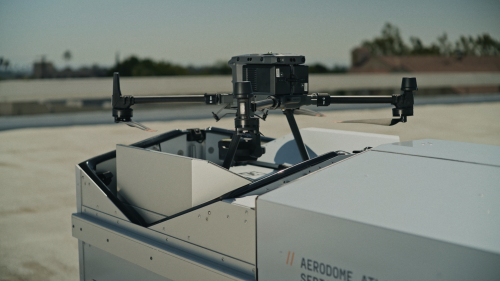
Flock Drone as First Responder
After acquiring Aerodome, Flock developed a named Drone as First Responder (DFR) system combining docked aircraft, remote operations, airspace awareness, live video, mission reporting, and regulatory support. Public materials describe launches connected to 911 calls, Falcon hits, Audio Detection events, alarms, and operator requests.[8][9]
- Known functions
- Remote launch, live HD, thermal or low-light video, zoom, flight control, airspace awareness, stream sharing, automated logs, mission reports, and FAA-compliance workflows.
- Software lineage
- The operational software and service stack incorporates the acquired Flock Aerodome technology.
- Connects to
- FlockOS, Flock911, Falcon alerts, Audio Detection, CAD, dispatchers, field responders, and airspace partners.
- Boundary
- Actual operations remain dependent on human oversight, agency policy, aircraft configuration, FAA rules, waivers, and detect-and-avoid requirements.
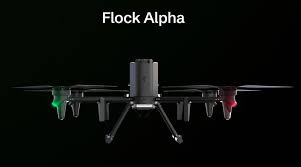
Flock Alpha DFR aircraft
Flock Alpha is the company’s publicly announced, purpose-built DFR aircraft. Flock attributes multiple cellular connections, thermal and low-light imaging, long-range zoom, a parachute, and substantial range and endurance to the design. Those specifications remain vendor claims and should be presented that way.[9]
- Known hardware claims
- Four cellular modems, multiple antennas, thermal and low-light sensors, long-range zoom, parachute, and integration with Flock’s dock and DFR software.
- Status
- Publicly announced and offered through early access; not represented as universally deployed.
- Why it matters
- Flock is moving from integrating third-party drones toward controlling more of the aircraft, communications, software, and response stack.
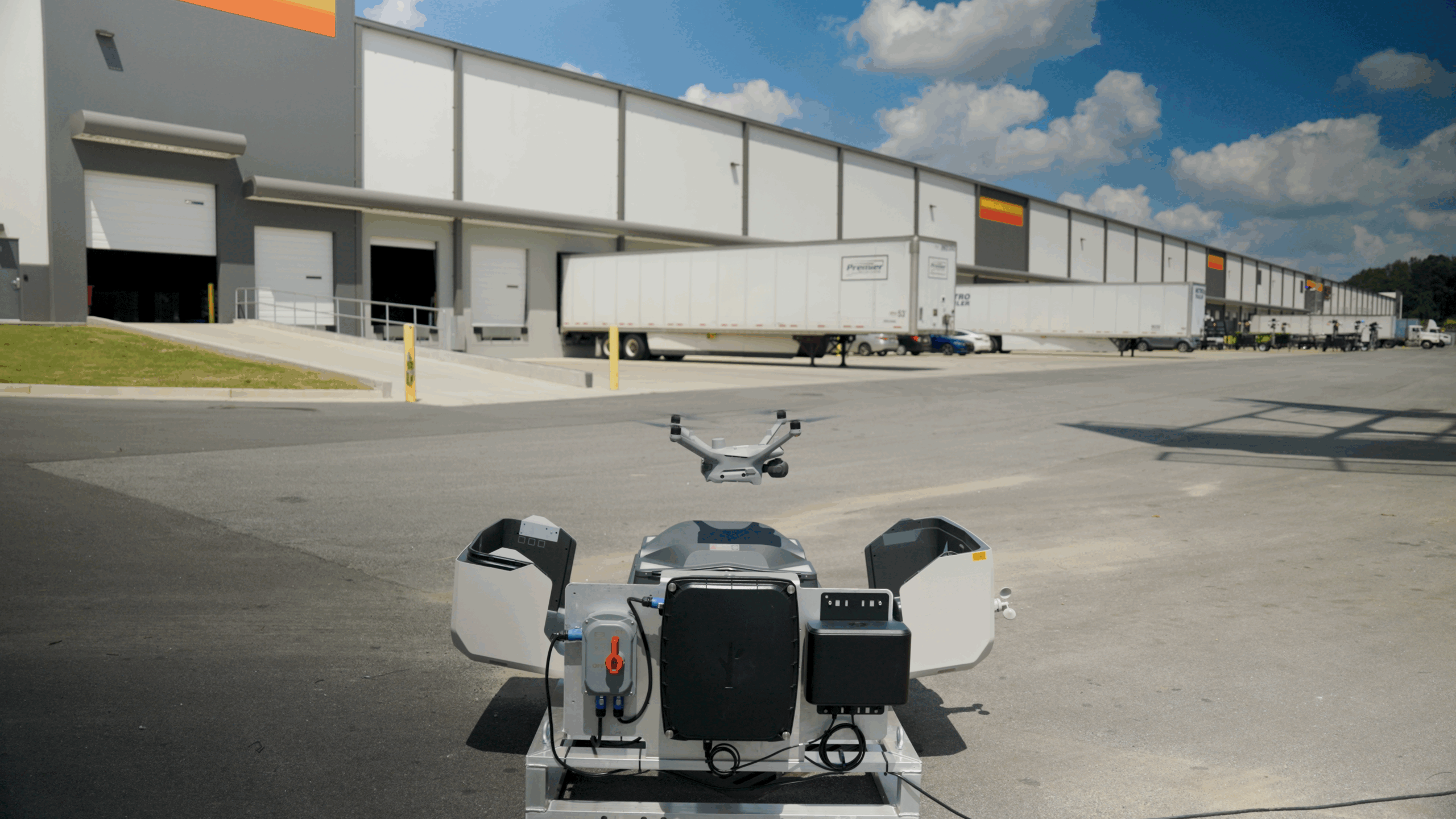
Flock Drone as Automated Security
Flock Drone as Automated Security (DAS) adapts the Aerodome and DFR architecture to private property and commercial-security settings. It is marketed around defined patrols, alarm response, remote intervention, and access-controlled video rather than ordinary municipal dispatch.[22]
- Users
- Businesses, campuses, industrial facilities, logistics sites, and private-security teams.
- Known functions
- Programmed patrols, alarm-triggered launches, remote aerial verification, live video, incident documentation, and site-specific procedures.
- Connects to
- Alarms, video analytics, remote monitoring, site response plans, Flock Aerodome software, and selected outside responders.
- Why it matters
- The same fused detection-and-response model is expanding through private contracts that may receive less public scrutiny than municipal procurement.
The software connecting everything
The hardware captures observations. The software makes those observations operational. FlockOS is the clearest expression of that strategy: a real-time command layer marketed as the place where Flock and third-party systems appear together on one map.[1]
Flock’s developer documentation makes the integration model concrete. Outside systems can submit alerts, dispatch events, vehicle images, and real-time locations for vehicles, people, drones, or other devices. They can manage hotlists, request LPR results, or receive webhook notifications. The public-facing significance is not the API syntax. It is that Flock has deliberately created interfaces through which other companies’ sensors and databases can become part of the same operating environment.[14]
| Product | Status | Operational role |
|---|---|---|
| Flock Safety Platform | Current | Core administration, LPR search, hotlists, alerts, sharing, mobile access, and audit information.[11] |
| FlockOS | Current | The operational fusion layer connecting cameras, LPR, CAD, RMS, 911, sensors, drones, maps, people, vehicles, and outside vendors.[1] |
| FreeForm | Current | Natural-language search across enabled LPR and video using descriptions of vehicles, clothing, objects, time, and location.[5] |
| Nova | Current | Investigative search and association across agency-authorized records, LPR, video, public records, and approved open sources.[13] |
| Flock911 | Current | Live or near-live 911 audio, transcripts, location, and incident context delivered to dispatch, field users, RTCCs, or drone operators.[12] |
| Flock Intelligence | Early access | Smart Sort and Night Shift point toward AI systems that narrow evidence, search across databases, and suggest leads for human review.[20] |
| Developer APIs | Current | Interfaces for hotlists, LPR lookup, vehicle-image analysis, CAD events, outside alerts, geolocation, and webhooks.[14] |
Natural-language tools lower the skill and time required to conduct broad searches. A user can describe “a dark SUV with rear damage” or a person’s visible clothing and accessories rather than construct a specialized database query. Lowering friction increases the number and breadth of searches an organization can realistically perform.
Data ownership, retention, and the rights Flock keeps
“The customer owns the data” sounds like a complete answer. It is not. Flock’s current standard terms say that customers retain all right, title, and interest in customer data. The same section grants Flock a limited, non-exclusive, royalty-free, irrevocable and perpetual worldwide license to use and disclose customer data to provide the service and to use customer data to support and improve Flock’s products and services.[39]
Flock’s February 2026 explanation says the perpetual language does not transfer ownership or allow the sale of customer data. According to the company, it allows product support and improvement to continue beyond one customer’s contract.[43] The distinction remains important: customer ownership and enduring vendor-use rights coexist. A public body should not describe ownership as though it means the vendor has no continuing rights.
Flock’s LPR policy adds another layer. It says customers control ordinary sharing and that Flock does not sell or publish customer LPR data for commercial purposes. It also says Flock uses a fraction of LPR images—less than one percent—after stripping metadata and identifying information, to improve its services through machine learning.[42]
Retention is similarly more complicated than one universal number. Flock describes 30 days as the standard period for customer data, subject to law and individual agreements. Its privacy policy says data collected on Flock devices may remain locally until storage capacity is reached or seven days have passed, whichever occurs first, before cloud lifecycle rules govern deletion.[40] The evidence policy says longer LPR retention—up to one year—may be offered when a governing body or elected official approves it, while other jurisdictions require shorter periods.[41]
Do not accept “30 days” as a complete retention answer. Request the configured period for every data type, product, export, saved clip, case record, audit log, and partner system. Deletion from the default search interface does not necessarily establish that every exported or associated copy has disappeared.
Audit logs are controls—but usually after the search
Flock emphasizes role-based access, required search reasons, activity logs, and agency-controlled sharing.[40] These measures can make misuse discoverable and can support discipline or criminal investigation. They do not make misuse impossible. A credentialed employee may still perform an abusive search before a supervisor, automated audit, journalist, or investigator notices the pattern.
The governance question is therefore not simply whether logs exist. It is whether someone reviews them, how quickly atypical behavior is surfaced, whether sensitive searches can be blocked before results appear, how long audit records remain, whether the public can obtain usable logs, and whether shared credentials or inactive accounts remain enabled.
The camera does not need a Flock logo
A city may disclose purchasing 50 Flock cameras. That number may say little about the total system available to investigators. FlockOS and related integrations can incorporate existing municipal cameras, business video, campus systems, parking facilities, mobile trailers, outside LPR, dispatch data, trackers, and partner-agency records.[1][15]
A camera does not need Flock branding to become a Flock input. A surveillance sensor does not need to look like a camera at all. A covert GPS tag, BLE asset tracker, acoustic detector, drone-detection system, alarm, or CAD event can supply the time and location record that connects the rest of the system.
This is why local investigations must move beyond device inventories. The important questions concern data sources, contracts, APIs, permissions, retention, exports, sharing arrangements, and triggers.
Public-private camera federation
Businesses, schools, universities, hospitals, apartment complexes, HOAs, parking operators, and private-security companies already operate large camera networks. A fusion platform can make selected feeds available to law enforcement without replacing every camera with Flock hardware.
That arrangement can be persistent or permission-based, broad or incident-specific. The public record is often weakest exactly where the surveillance surface grows fastest: private entities may not appear in a city’s camera count, procurement list, or public map, while police access may be defined through a subscription, gateway, sharing agreement, or cloud permission.
Counting branded roadside poles no longer measures the system. The accessible network may include cameras and sensors owned by businesses, schools, neighboring agencies, private security, and other vendors.
It is not just Flock
Flock is the primary case study because its expansion is unusually visible, but the architecture is not unique. Public-safety and private-security vendors are converging on the same model: sensors feed a unified operational map; AI and search tools correlate observations; dispatchers, analysts, officers, or drone pilots act on the result.
| Vendor | Overlap with the fusion model |
|---|---|
| Axon / Fusus | RTCC fusion, community cameras, body-camera and evidence ecosystems, drones, and live operations.[26] |
| Motorola / Vigilant | Fixed and mobile LPR combined with CAD, records, command-center, and video systems.[27] |
| Peregrine | Investigative data fusion across law-enforcement databases and operational systems.[28] |
| Genetec / AutoVu | LPR, video management, access control, and hybrid enterprise or municipal security.[29] |
| Rekor | Vehicle recognition, roadway intelligence, traffic analytics, and cloud or edge deployments.[30] |
| SoundThinking | Acoustic detection, LPR, and investigative products.[31] |
| BRINC | Drone as First Responder hardware and operational software connected to public-safety workflows.[32] |
| StarChase, 3SI, Tacti Track | Vehicle and asset trackers—including GPS, audio, video, and targeted BLE devices—that can feed operational systems.[15] |
A real deployment may combine several companies. One supplies cameras. Another performs plate recognition. Another provides dispatch and records software. Another supplies covert trackers. Another supplies drones. A fusion platform places all of them into one interface.
From detection to response
Flock’s growth matters because the platform closes the distance between collecting data and acting on it. The same environment can receive an event, add nearby context, generate an alert, recommend a search, and route live information to a responder.
Airspace intelligence extends the model upward. Flock’s 2026 partnership with AirSight places drone detections into FlockOS alongside other public-safety information. The companies have also described future sensor-to-response workflows in which an unauthorized drone detection could trigger a Flock response drone. The integration direction is documented; universal deployment of every proposed automation is not.[10]
Flock Cameras: ACLU Raises Alarm About Nationwide Surveillance Database
Democracy Now! interviews the ACLU’s Chad Marlow about Flock’s AI-sorted license-plate database, weak regulation and oversight, third-party access, federal sharing, and the creation of what critics describe as a nationwide mass-surveillance system.
Sharing, national lookup, and federal access
The network effect does not stop at an agency boundary. Flock supports sharing between organizations and has offered broader lookup across participating cameras. The exact reach depends on local settings, partner participation, policy, contract, and changes to the company’s controls.[16]
Federal access has been a documented point of conflict. Flock says it does not have an ICE contract, has separated federal accounts from ordinary lookup, defaults federal sharing off, and requires more explicit one-to-one arrangements.[17] Those restrictions followed incidents in which federal or out-of-state users accessed local data contrary to the expectations of officials or residents. Flock paused pilot programs with CBP and Homeland Security Investigations after Illinois officials raised concerns about access and permissions.[18]
Direct federal access is not the only route. Local agencies can perform searches for outside agencies. Reporting based on search records has documented immigration-related requests moving through local access even where federal controls were presented as restrictive.[19]
Flock is not currently an unrestricted national portal for every federal user. Federal and cross-jurisdiction access has existed, controls have failed or been misunderstood, and several safeguards were implemented reactively after public exposure.
Documented failures, misuse, and mission creep
The risks are not limited to hypothetical future products.
Exposed video feeds
In late 2025, researchers found dozens of Flock Condor video feeds accessible online without expected authentication. Reporting described access to live or archived footage and, in some instances, administrative controls. Flock characterized the event as a limited configuration issue affecting a small number of devices and said it corrected the problem.[33]
Insider misuse
Audit logs can expose abuse, but often after the search has occurred. On July 23, 2026, a Georgia crime-center supervisor was arrested after authorities alleged that Flock access had been used repeatedly to track a domestic partner’s vehicle.[34] The case is a direct example of how legitimate credentials can become a stalking tool.
Mission creep
Records analyzed by EFF documented Flock searches for school residency verification, background investigations, noise complaints, and other matters far outside the violent-crime scenarios emphasized in many sales presentations.[35] Once a broad search engine is available, the pressure to use it for increasingly ordinary administrative purposes is predictable.
Abandoned or withdrawn features
The human-distress audio pilot and the planned Ring integration show that public scrutiny can alter the product path. Flock ended the distress-detection rollout in July 2026, and Ring canceled its planned Flock partnership before Ring video was sent to Flock.[7][21] The cancellations matter, but the underlying platform architecture remains capable of accepting new classifications and outside video sources.
The legal fight is shifting from one observation to accumulated location history
A single camera observing a vehicle on a public road is not the same constitutional question as a dense network reconstructing weeks or months of movement. Current litigation is increasingly focused on duration, geographic coverage, retrospective search, cross-jurisdiction access, and the ability to infer a person’s home, work, relationships, medical visits, religious activity, or political participation.
The Norfolk, Virginia challenge remains active in the Fourth Circuit. The ACLU argues that the scale and searchability of the city’s Flock network creates a qualitatively different form of location surveillance than an officer seeing one vehicle in public.[37]
In June 2026, the Supreme Court held in Chatrie v. United States that police conducted a Fourth Amendment search when they obtained a person’s historical cellphone location data from Google because people have a reasonable expectation of privacy in that information.[24] The decision did not directly declare ALPR databases unconstitutional. It does strengthen the argument that aggregated digital location history can become constitutionally significant even when individual observations originate outside the home.
Courts will have to decide when repeated public-road observations become a persistent location record that requires greater constitutional protection. The answer may turn on density, duration, search capability, sharing, and association with other databases—not the appearance of any single camera.
What Flock says it does not do
Accurate criticism is stronger than exaggeration. Several common claims go beyond the current public evidence.
Flock publicly says it does not use facial recognition.[25] That does not mean the platform cannot search for or follow people. Attribute searches, time, location, movement, clothing, objects, and associated vehicles can support person tracking without assigning a legal identity through a face.
Flock says Audio Detection analyzes a rolling local buffer and transmits qualifying event clips rather than storing all surrounding audio.[6] Local policies, contracts, and testing records should still be examined.
The announced Ring partnership was canceled before launch. Current claims should not state that Flock has direct access to every Ring camera.[21]
No credible public evidence reviewed for this article establishes that Flock roadside cameras promiscuously harvest nearby Wi-Fi or Bluetooth devices, operate cell-site simulators, or deploy armed drones. Targeted GPS and BLE trackers exist in the partner ecosystem, which is a different capability.
What may come next
This assessment is based on publicly available information as of July 23, 2026. A capability that cannot be confirmed publicly should not be represented as currently deployed. However, “not publicly confirmed” does not mean the capability does not exist, is not being privately tested, or is technically impossible.
Deeper third-party sensor fusion
Flock’s APIs already accept outside alerts, CAD events, vehicle images, hotlists, and geolocation updates. More vendors can be connected without Flock manufacturing every sensor.
More sensor-triggered response
Existing 911, LPR, acoustic, alarm, and drone-detection workflows make additional automated recommendations, camera actions, and drone launches a direct extension of the current platform.
Proactive investigative AI
Smart Sort and Night Shift already demonstrate movement from manual database queries toward agents that rank evidence, search across sources, and suggest relationships or next steps.
Passive Wi-Fi or Bluetooth presence sensing
Flock does not currently document roadside cameras that harvest nearby devices. A third-party RF sensor could still submit presence or location events through existing platform interfaces, though modern address randomization limits durable identity.
Passive radio-presence sensing deserves especially careful wording. Flock does not currently document roadside Wi-Fi or Bluetooth harvesting. Yet the platform already accepts outside geolocation and alert events, and targeted BLE and GPS tracking products already exist in the partner ecosystem. Integrating a separate presence sensor would be technically plausible. Modern address randomization makes long-term identity less reliable, but it does not eliminate crowd counts, dwell estimates, repeat appearances within rotation windows, or correlation with camera and vehicle observations.[14][15][38]
The dominant publicly evidenced direction is not a specific speculative sensor. It is more fusion and more automation: more sources entering the same environment, more AI narrowing and associating records, and shorter paths from a detection to a real-world response.
How to investigate a local deployment
The most useful public-records question is no longer “How many Flock cameras did you buy?” Ask instead:
What data can enter your Flock environment, who can search it, what can leave it, and which actions can it trigger?
- Every Flock product and model in use, including Falcon, Falcon SR, Falcon LR, Falcon Flex, Sparrow, Condor Fixed, Condor PTZ, solar PTZ, multi-directional video bundles, Mobile Security Trailers, Audio Detection or Raven, Wing or Wing Gateway, Flock DFR or Aerodome, Flock Alpha, Drone as Automated Security, Flock Safety Platform, FlockOS, FreeForm, Nova, Flock911, Smart Sort, and Night Shift.
- Every third-party camera feed and participating private entity.
- All CAD, RMS, 911, evidence, tracker, drone, alarm, and vendor integrations.
- Sharing settings and recipient lists for local, state, national, private, and federal access.
- Historical settings, not merely the configuration in effect when the request is answered.
- Search, export, audit, and misuse-investigation logs.
- Retention settings for each data class and exported evidence.
- Custom hotlists, alert rules, watchlists, and alert recipients.
- FreeForm queries and person-detection alert configurations.
- Drone triggers, approvals, waivers, flight logs, and retained video.
- AI features enabled, disabled, offered, piloted, or used through early access.
- Contracts with businesses, schools, hospitals, HOAs, apartments, and property managers.
- Security assessments, exposed-device incidents, and breach notifications.
- Contract language covering ownership, Flock’s data license, deletion, and model improvement.
Communities can also demand public approval before new integrations are enabled, periodic publication of search and sharing statistics, independent audit access, short retention periods, enforceable offense restrictions, notice when vendor terms change, and automatic termination of credentials when personnel leave.
The core warning
Flock is one recognizable company inside a broader shift toward fused law-enforcement surveillance. Cameras, databases, private systems, trackers, drones, dispatch software, and products from multiple vendors are increasingly connected into shared operational environments.
The physical equipment may be visible. The most consequential parts of the system usually are not: permissions, associations, search histories, sharing arrangements, retention choices, exports, AI recommendations, and response triggers.
The danger is not that every imaginable capability already exists. It is that the platform has been designed so new sensors and databases can be added without rebuilding the system. That makes procurement and integration decisions made today the foundation for capabilities that may arrive later.
The future of surveillance is not defined by a recognizable camera. It is defined by systems that can exchange information, associate observations, and turn them into action.
Sources / reference points
- Flock Safety: FlockOS — Real-Time Crime Center Platform
- Flock Safety: LPR for Every Roadway
- Flock Safety: Frequently Asked Questions
- Flock Safety: Video Without Limitations
- Flock Safety: FreeForm Search
- Flock Safety: How Audio Detection Works
- Electronic Frontier Foundation: Flock Ends Human-Distress Audio Rollout
- Flock Safety: Aerodome Acquisition and DFR Expansion
- Flock Safety: Public-Safety Drone Overview
- Flock Safety: AirSight Airspace Intelligence Integration
- Flock Safety Platform
- Flock911
- Flock Nova
- Flock Safety Developer Hub
- Flock Safety Partner Program
- Flock Safety: Network-Sharing and Federal Cooperation Statement
- Flock Safety: Does Flock Share Data With ICE?
- Associated Press: Flock Pauses Federal Pilot Programs After Access Concerns
- 404 Media: ICE Searches Through Local Flock Access
- Flock Safety: Amplified Intelligence, Smart Sort, and Night Shift
- Ring: Ring and Flock Cancel Partnership
- Flock Safety: Drone as Automated Security
- Flock Safety: Evolution of FlockOS
- Supreme Court of the United States: Chatrie Opinion
- Flock Safety Trust Center
- Axon Fusus
- Motorola Solutions: License Plate Recognition Systems
- Peregrine Technologies
- Genetec
- Rekor
- SoundThinking
- BRINC: Drone as First Responder
- The Verge: Flock Camera Feeds Exposed
- Atlanta News First: Conyers Supervisor Arrested After Flock Audit
- Electronic Frontier Foundation: More License-Plate-Reader Mission Creep
- Flock Safety: Does Flock Enable Mass Surveillance?
- ACLU: Schmidt v. City of Norfolk
- Android Open Source Project: Wi-Fi MAC Randomization
- Flock Safety: Terms and Conditions
- Flock Safety: Data Privacy and Retention
- Flock Safety: Evidence Policy
- Flock Safety: License Plate Reader Policy
- Flock Safety: February 2026 Terms and Conditions Explanation
- Flock Safety: Trademark Notice and Named Product List
- Flock Safety: Condor, Solar PTZ, Multi-Directional Video, and Wing Gateway
- Flock Safety: Mobile Security Trailer Features and Guardian Mode
- Flock Safety: Scottsdale Falcon, Condor, Wing VMS, and Private Video Deployment
- Flock Safety Product Hub
Revision history
- July 23, 2026
- Initial publication. Research current through July 23, 2026.